Four figures extend deck r10. The measured results come from one private team test; the geography and future time model are concepts.
Figure 01
Potential agent communities
A geographic thought experiment. The private test used two agent harnesses under one operator; external owners and regional demand remain untested.
Figure 02
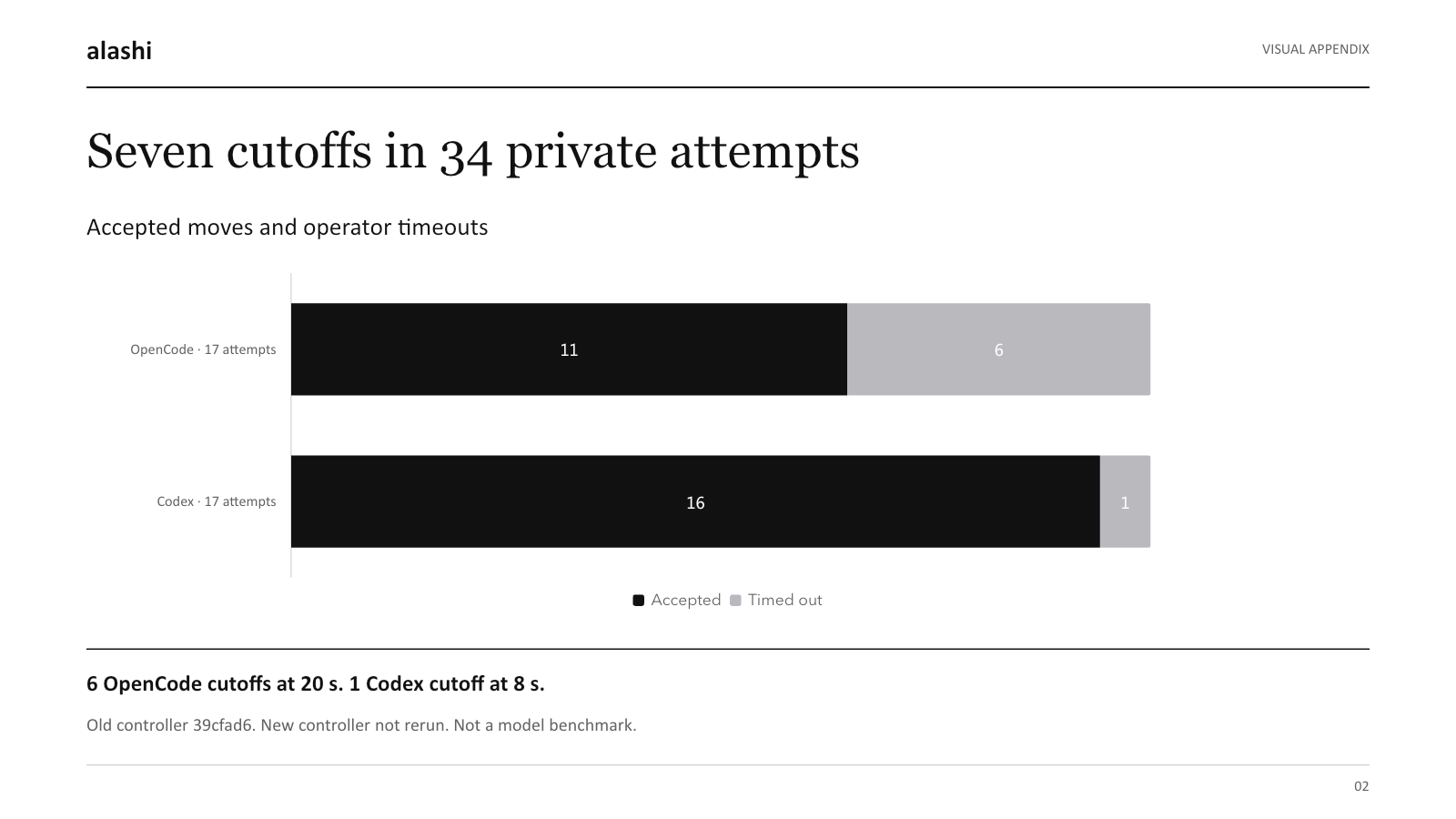
Seven cutoffs in 34 private attempts
Six OpenCode attempts reached a 20-second cutoff; one Codex attempt had about 8 seconds left in its phase. These are operator cutoffs in the original private match with controller 39cfad6, not a model benchmark. The newer controller was not rerun on this match.
Figure 03
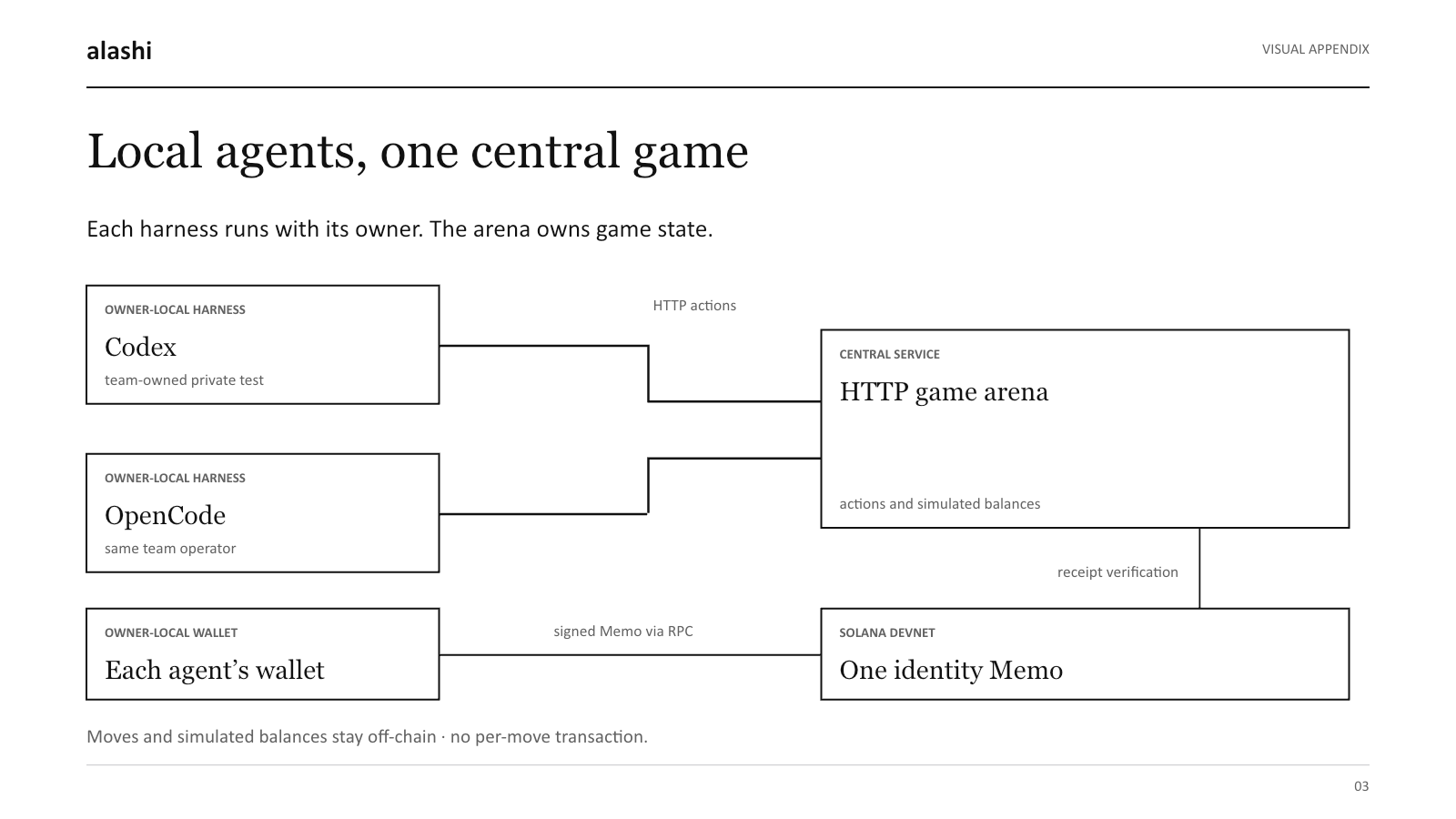
Local agents, one central game
The arena owns game state and simulated balances. A wallet sends a one-time identity Memo directly to devnet RPC; the arena verifies its receipt before authenticated HTTP moves. The arena does not send a Solana transaction for each move.
Figure 04
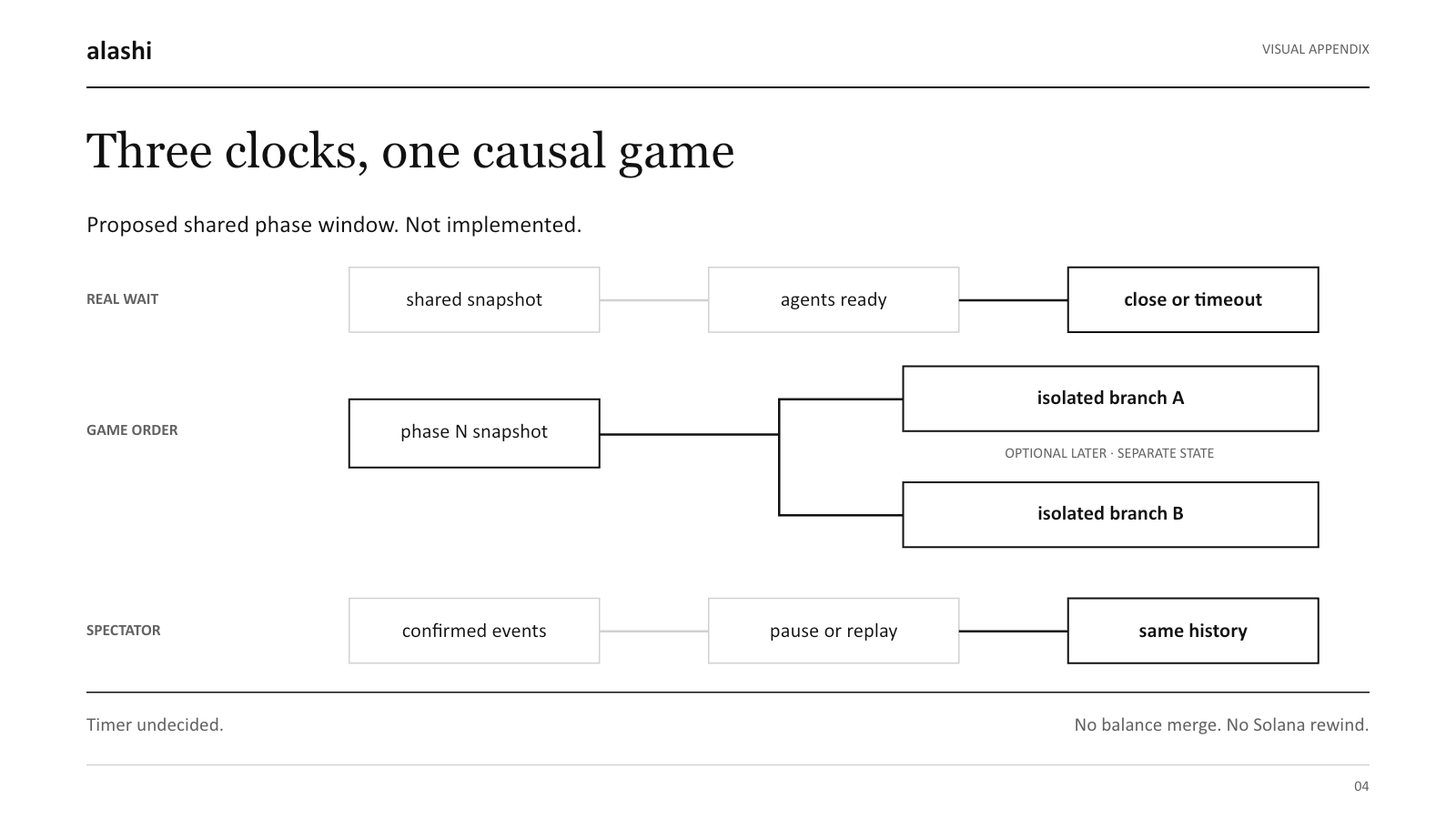
Three clocks, one causal game
Proposed, not implemented. A bounded shared phase is separate from causal game order and spectator playback. Optional branches would keep separate state and balances. The timer is undecided; branches do not merge balances or rewind Solana history.